Pterygium Surgery/Treatment Gurgaon
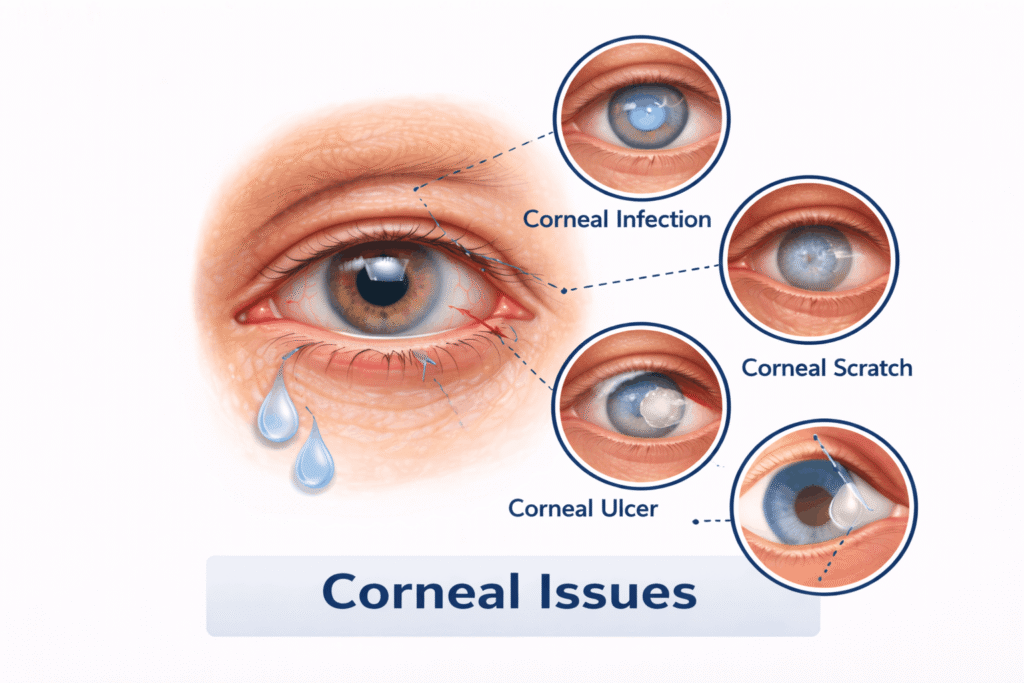
A pterygium is a non-cancerous, wedge-shaped growth of tissue that starts on the white part of the eye (sclera) and can extend onto the clear front surface of the eye (cornea). It is also commonly called "surfer’s eye" because it often affects people who spend a lot of time in the sun or wind.
Causes
- Prolonged exposure to UV light
- Dry, dusty, or windy environments
- Chronic eye irritation from sun, wind, or dust
- More common in people living near the equator or working outdoors
Symptoms
- Visible, fleshy growth on the white of the eye (usually on the side near the nose)
- Redness or inflammation
- Dryness, irritation, or a gritty feeling
- Blurred vision (if the growth extends onto the cornea)
Diagnosis
- Diagnosed during a routine eye exam
Management
Conservative (Non-surgical) Treatment:
- Lubricating eye drops to relieve irritation and dryness
- Anti-inflammatory drops for redness or swelling
- Sunglasses with UV protection to prevent progression
Surgical Treatment:
- Recommended if the pterygium:
- Grows toward the center of the cornea and affects vision
- Causes significant discomfort
- Is cosmetically bothersome
- Surgery is typically safe and done on an outpatient basis
Prevention Tips
- Wear UV-protective sunglasses and hats when outdoors
- Use artificial tears in dry or dusty conditions
- Avoid prolonged exposure to sun and wind without eye protection
FAQ
A pterygium (plural: pterygia) is a non-cancerous, fleshy, triangular growth of the conjunctiva (the clear membrane over the white of the eye) that extends onto the clear cornea. It usually develops on the inner corner of the eye near the nose. While benign, if left untreated, a pterygium can progressively grow across the cornea, altering its curvature and impairing vision.
Both are UV-induced conjunctival growths, but they differ in location and behavior:
- Pinguecula: A localized yellowish, raised protein and lipid bump on the white sclera that never grows onto the cornea.
- Pterygium: A vascularized, fleshy tissue growth that actively crosses over the limbus and encroaches onto the clear cornea, which can distort vision and cause irregular astigmatism.
The primary triggers and risk factors include:
- Ultraviolet (UV) Radiation: Long-term, unprotected exposure to sunlight is the leading cause.
- Environmental Irritants: High airborne particulate matter (PM2.5), construction dust, dry climates, and wind in urban environments like Gurgaon accelerate ocular surface inflammation.
- Chronic Dry Eyes: Persistent friction and poor tear-film stability trigger abnormal tissue proliferation.
Key symptoms include:
- A visible pinkish-white, raised wing-shaped growth on the eye surface.
- Persistent redness, burning, and chronic eye irritation.
- Foreign body sensation (feeling like grit or sand is trapped in the eye).
- Blurry or distorted vision caused by induced corneal astigmatism.
- Discomfort while wearing contact lenses.
No. A pterygium is an anatomical growth that cannot dissolve, disappear, or be cured with eye drops or medications. Lubricating drops, decongestants, or mild anti-inflammatory drops can reduce redness, swelling, and foreign-body irritation, but surgical removal is the only definitive way to eliminate the physical growth.
Surgical excision is recommended when:
- The growth advances toward the central pupil, threatening clear sight.
- It distorts corneal shape, causing high irregular astigmatism and blurry vision.
- Persistent redness, itching, and foreign-body irritation do not respond to medical drops.
- It restricts normal eye movements.
- The patient seeks removal for aesthetic or cosmetic reasons.
At ARC Eye Centre, pterygium removal is performed using Pterygium Excision with Conjunctival Limbal Autografting (CLAU) secured with Fibrin Tissue Glue:
- The abnormal pterygium tissue is carefully dissected from the cornea and sclera.
- A healthy microscopic patch of conjunctiva containing limbal stem cells is harvested from beneath the upper eyelid of the same eye.
- The graft is positioned over the bare scleral bed and bonded instantly using biological Fibrin Glue instead of traditional sutures. This technique eliminates stitch-related prickling, speeds up healing, and reduces the recurrence rate from over 30% (seen with older techniques) to under 2–3%.
No. The surgery is performed under local topical anesthetic eye drops, keeping the eye completely numb throughout the procedure. Because biological fibrin glue is used instead of sharp sutures at Arc Eye Centre, post-operative discomfort is minimal—most patients experience only mild grittiness or watering for the first 24 to 48 hours.
Pterygium surgery is a quick, daycare outpatient procedure taking approximately 15 to 30 minutes. No overnight hospital stay is required; patients can return home comfortably the same day shortly after the procedure.
Recurrence was a major drawback of older surgical methods (such as the "bare sclera" technique). However, modern excision paired with a limbal autograft and fibrin glue reduces recurrence rates to less than 2–3%. Strictly following post-operative steroid drop regimens and wearing UV400-protective sunglasses outdoors prevents regrowth.
Our Services
Working Hours
Monday:
9am – 7pm
Tuesday:
9am – 7pm
Wednesday:
9am – 7pm
Thursday:
9am – 7pm
Friday:
9am – 7pm
Saturday:
9am – 7pm
Sunday:
11am – 2pm
( Appointment Only )
How can we help you?
ARC Eye and Retina Centre delivers advanced eye and retina care with expert doctors, modern technology, and compassionate patient-focused treatment.