Glaucoma
What is Glaucoma? (The "Silent Thief of Sight")
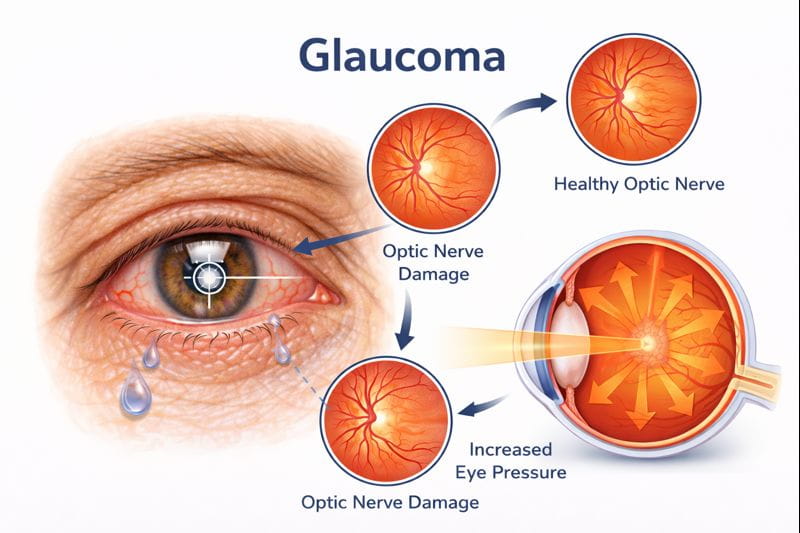
Glaucoma refers to slow damage of the optic nerve from increase in intraocular pressure. The optic nerve relays signals of vision from the retina to the brain. The damage is usually associated with increased eye pressure, but glaucoma can still occur in those with ‘normal’ eye pressure. Glaucoma is progressive and vision loss is permanent. Advanced glaucoma can cause total blindness.
Glaucoma is referred to as the ‘Silent Thief of Sight’ because of the lack of early noticeable symptoms. Most people will not experience the pain or changes in their vision until it is too late. The disease attacks peripheral, or side, vision first. Because peripheral vision loss is difficult to notice, a comprehensive eye exam is required.
Anyone can be diagnosed with glaucoma, but those who are over 40, have a family history of glaucoma, greater risk associated with diabetes and some other conditions, and those with some other elevated medical conditions are at greater risk.
If glaucoma is diagnosed early, the progressive vision loss can be slowed. Regular eye exams are one of the best ways to prevent vision loss since some of the tests will detect glaucoma even when it is symptomatically present. The only way to protect your vision is with preventative eye care.
Common Types of Glaucoma Treated at ARC Eye Centre
Glaucoma is a group of eye diseases that can really hurt the optic nerve in our eyes. This usually happens when the pressure inside the eye gets high.
Primary Open-Angle Glaucoma POAG. It happens slowly. We might not even notice it is happening. To treat POAG anti glaucoma drop are started , if needed laser or surgery is also required
Angle-Closure Glaucoma-This is when the part of the eye that drains fluid gets blocked. It makes the pressure in the eye go up fast. This is very serious. Treatment start with topical medication to laser peripheral iridotomy to glaucoma surgery
Normal-Tension Glaucoma- This is when our optic nerve gets hurt even if the pressure in our eye is normal
Secondary Glaucoma- This happens because of another problem, like diabetes, an eye injury or using steroids for a time or any inflammation like uveitis To treat Secondary Glaucoma we need to take care of the problem and also make the pressure in our eye go down.
Congenital glaucoma-is a rare condition present at birth or during early childhood due to abnormal development of the eye's drainage system. Symptoms may include excessive tearing, sensitivity to light, cloudy corneas, and enlarged eyes. Surgery is usually the primary treatment and offers the best chance of preserving vision when performed early.
Even though we cannot make glaucoma go away we can control it if we find out we have it early and take care of our eyes regularly. Going to the glaucoma specialist often getting tests and getting the right treatment can help slow down the disease and keep our vision safe.
Early Symptoms You Should Discuss with a Glaucoma Specialist in Gurgaon
One of the earliest signs of glaucoma can be a gradual reduction in side (peripheral) vision. Most people do not notice this change in the beginning because it develops slowly over time
The initial symptom may be a gradual loss of vision from the sides of your eyes. You do not know about the change until it interferes with your routine activities. Headaches are another common symptom; some individuals suffer from headaches in and around their eyes because of an increase in eye pressure.
There are certain types of glaucoma which have sudden symptoms. Sudden onset of severe eye pain, eye redness, headache, nausea, vomiting, and sudden decrease in vision is a serious condition and requires immediate treatment.
Individuals who have glaucoma in their family members, those suffering from diabetes, high blood pressure or who are above the age of forty should be extra careful, even if they do not have any symptoms at all. Eye examination can reveal glaucoma before it causes vision loss.
If you have any of these symptoms then it is important to visit a glaucoma specialist in Gurgaon as soon as possible. Early detection is the key to preventing vision loss due to glaucoma.
Why You Need a Leading Glaucoma Eye Hospital in Gurgaon for Early Detection
One of the most common reasons for vision impairment across the world is glaucoma. It is alarming in its nature because the majority of people do not experience any symptoms related to this eye problem and can be unaware about it before vision damage takes place. That is why finding a reputable glaucoma eye hospital in Gurgaon is vital.
The ARC advanced eye and retina hospital offers all the necessary diagnostic methods that are used to determine this health problem and find out about it in time. Intraocular pressure test, examination of the optic nerve, visual field assessment, and other tests allow the specialists to see whether there are some changes that cannot be detected otherwise.
When the disease is discovered in its initial stage, there are higher chances to stop its development. The treatment of the condition depends on its severity and can be conducted through the use of eye drops, laser procedures, and operations to control the pressure in the eyes and save the optic nerve.
People who have relatives with glaucoma, diabetes, high blood pressure, and individuals who are over 40 should visit ARC advanced eye and retina centre specialists to have regular eye examinations.
What to Expect During Your Consultation with a Glaucoma Specialist
Consultation with a glaucoma specialist is one of the essential steps in identifying and treating this disease without vision loss. First, the doctor will inquire about your history, your family's history of glaucoma, drugs you are taking, and any symptoms you may be experiencing
During eye examination, specialists measure eye pressure, test your sight, examine the optic nerve and peripheral vision. Some patients undergo imaging tests that allow identifying damage to the optic nerve that is hard to detect during a standard eye check-up.
These tests are used to find out whether a patient have glaucoma, has the risk of its development or suffers from other eye condition. Then the specialist informs you about the result of your examination and advises what treatment is necessary.
The specialist prescribes various treatment methods depending on the form and level of disease development: eye drops, laser surgery or surgery, observation of the condition. Your questions will also be answered. ARC eye hospital equipped with all the necessary equipment which is necessary to treat and diagnose glaucoma
Pediatric Glaucoma: Expert Care at Gurgaon’s Top Eye Facility
Pediatric glaucoma is a severe and very rare disease among infants and children. The high level of eye pressure causes optic nerve damage which can lead to blindness. early diagnosis becomes really important for saving sight in pediatric patients.
The signs of this condition are watering, photophobia, blinking, enlargement of cornea/eyeball, cloudiness of the cornea, and delayed visual development. In case any of these signs appear, parents should visit to eye doctor specialized in glaucoma.
ARC EYE AND RETINA CENTRE, children receive a comprehensive examination with the help of high-tech equipment.Our pediatric eye specialist Dr RASTOGI diagnose the illness and create a personal treatment plan. If needed cornea and and retina specialist also sees patient
The methods of treating pediatric glaucoma may differ; they include medication, surgical procedure, and laser treatment. It is vital for the patient to visit a doctor regularly to control eye pressure and evaluate the development of vision.
Book an Appointment at the Best Glaucoma Eye Hospital in Gurgaon
If you are having glaucoma, or suspected glaucoma or family history of glaucoma , you can visit our eye hospital ARC advanced eye and retina centre which is equipped with all the machine needed for diagnosis and treatment of glaucoma in adults as well as pediatric patient, DR S KUMAR , DR KRITIKA AND DR RASTOGI, work as team to handle all the cases and devise the individualised treatment plan for each patients
FAQ
Glaucoma is a group of eye diseases that damage the optic nerve, typically due to elevated intraocular pressure (IOP). It is called the "silent thief of sight" because it develops so slowly and painlessly that patients usually experience no noticeable symptoms in the early stages, losing peripheral (side) vision first before realizing anything is wrong.
When looking for the best glaucoma specialist, check for advanced fellowship training dedicated entirely to glaucoma, years of hands-on experience in managing complex optic nerve cases, and affiliation with a fully equipped glaucoma eye hospital. A top specialist will emphasize early risk profiling, precise diagnostic mapping, and tailored long-term care plans.
A comprehensive glaucoma eye hospital provides end-to-end management under one roof. This includes advanced diagnostic infrastructure (such as OCT, visual field perimetry, gonioscopy, and tonometry), medical treatments with specialized anti-glaucoma eye drops, laser procedures (like SLT and LPI), and surgical options like trabeculectomy or minimally invasive glaucoma surgery (MIGS).
Glaucoma cannot be completely prevented or cured, and any vision lost to the disease cannot be restored. However, under the regular care of an experienced glaucoma specialist, the progression of the disease can be effectively halted or slowed down to protect your remaining vision for life.
Anyone over the age of 40 should undergo annual screening. The risk increases significantly if you have a direct family history of glaucoma (the strongest single risk factor), high intraocular pressure, diabetes, extreme nearsightedness (high myopia) or farsightedness, a history of eye trauma, or long-term usage of steroid medications.
A comprehensive glaucoma evaluation at a specialized eye clinic involves several quick, painless assessments:
- Tonometry: Measures the internal pressure of the eye.
- Ophthalmoscopy / OCT: Evaluates the structure and health of the optic nerve.
- Visual Field Test (Perimetry): Identifies any missing spots in your peripheral vision.
- Gonioscopy: Checks the eye's fluid drainage angle.
While most common forms of glaucoma have zero symptoms early on, you should see a specialist immediately if you experience a gradual tunnel vision effect or persistent headaches around the eyes. If you experience sudden, severe eye pain, blurred vision, eye redness, rainbows/halos around lights, nausea, or vomiting, it could indicate acute angle-closure glaucoma—a medical emergency.
Treatment plans are customized based on the severity of the condition and include:
- Prescription Eye Drops: To decrease fluid production or improve drainage.
- Laser Therapy: Non-invasive procedures to open up blocked drainage channels.
- Surgical Interventions: Filtering surgeries or MIGS to lower pressure when drops and lasers are no longer sufficient.
Follow-up frequency depends entirely on your disease stability and eye pressure control. Generally, stable patients are monitored every 3 to 6 months, while glaucoma suspects or high-risk patients are evaluated every 6 to 12 months.
No. Routine diagnostic tests and daily eye drops are completely painless. Laser procedures and modern surgical treatments are performed under local anesthesia or numbing eye drops, ensuring that patients experience minimal to no discomfort during the process.
Our Services
Working Hours
Monday:
9am – 7pm
Tuesday:
9am – 7pm
Wednesday:
9am – 7pm
Thursday:
9am – 7pm
Friday:
9am – 7pm
Saturday:
9am – 7pm
Sunday:
11am – 2pm
( Appointment Only )
How can we help you?
ARC Eye and Retina Centre delivers advanced eye and retina care with expert doctors, modern technology, and compassionate patient-focused treatment.