Diabetic Retinopathy
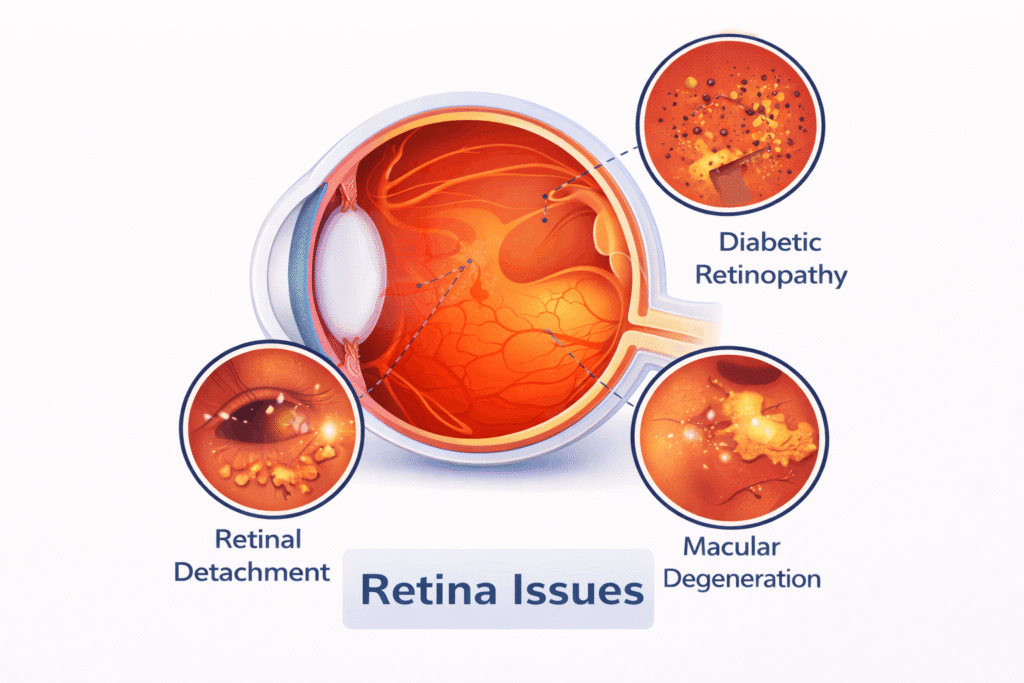
What is Diabetic Retinopathy? Understanding the Risks
Diabetic retinopathy refers to changes in the eye/retina due to diabetes or high blood sugar
Pathology- Hyperglycemia leads to the activation of alternative pathways of glucose metabolism, such as the polyol pathway, advanced glycation endproducts (AGEs) formation, protein kinase C (PKC) activation, hexosamine pathway flux and Poly(ADP-ribose) polymerase activation.
The end result of these pathways is the activation of cytokines and growth factors, leading to vascular endothelial dysfunction, increased vascular permeability, and eventual microvascular occlusion. Microvascular occlusion then leads to retinal ischemia, which promotes neovascularisation and the formation of IRMAs
STAGES of Diabetic Retinopathy
MILD NON PROLIFERATIVE DIABETIC RETINOPATHY
In the mild stage, only microaneurysm, usually vision is within normal limits.
MODERATE NON PROLIFERATIVE DIABETIC RETINOPATHY
increased number of microaneurysms and dot-and-blot haemorrhages; cotton-wool spots and hard exudates may be present
SEVERE NON PROLIFERATIVE DIABETIC RETINOPATHY
"4-2-1 rule"—4 quadrants of diffuse retinal haemorrhages and microaneurysms, 2 or more quadrants of venous beading, or 1 or more quadrants of IRMA, any of the above criteria diagnosed as severe.
PROLIFERATIVE DIABETIC RETINOPATHY
any form of neovascularisation like NVE/NVI/NVA diagnosed as proliferative diabetic retinopathy
High-risk characteristics include the following:
- NVD > 1/4 to 1/3 disc area
- Any NVD associated with vitreous or preretinal haemorrhage
- Any NVE associated with vitreous or preretinal hemorrhage
Advanced Diabetic Retinopathy Treatment in Gurgaon
ARC - Advanced Eye and Retina Centre, Gurgaon, we provide comprehensive diabetic eye care using state-of-the-art diagnostic technology, including Optical Coherence Tomography (OCT), Fundus Fluorescein Angiography (FFA), and detailed retinal imaging for accurate assessment and treatment planning. Our retina specialists focus on early detection of diabetic retinal changes before significant vision loss occurs. Starting from prevention and control at the early stage of disease, we counsel and educate patients for diabetic control and regular monitoring of blood sugar and other systemic diseases.
Then benefits of starting treatment early to preserve vision in long term. Treatment include LASER pan retinal photo coagulation and FOCAL LASER for proliferative DR Intravitreal injection for macular oedema, which includes anti-VEGF and steroid injection, we have all the injections available, and via an individual approach, we decide which injection is best for the patient.
The injections we have are RANIBIZUMAB, AFLIBERCEPT, BROLUCIZUMAB, OZURDEX, and FARCIMAB. For advanced disease which needs retinal surgery, we have a retina specialist with more than 10 years of experience with more than 20000 surgical experiences from premier institutes like AIIMS DELHI, AFMC AND ARVIND EYE HOSPITAL, who can handle any retinal disease with the best care.
Types of Diabetic Retinopathy We Treat
We treat all stages of diabetic retinopathy. From early stage which needs prevention and control of diabetes and regular follow ups
For macular edema - we have all form of injection and focal laser
For PDR - we treat it by injection Antivegf and pan retinal photocoagulation
For vitreous hemorrhages and retinal detachment - we treat it by advanced machine for retinal surgeries
Key Symptoms and Early Detection of Diabetic Eye Disease
For many people living with diabetes, eye problems creep in over time, often without them even noticing any warning signs initially. So it's no surprise that diabetic eye disease, especially diabetic retinopathy, gets called a "silent" threat to their vision - because by the time anything might give it away, the damage is already done to their retinas.
Some common symptoms to keep an eye out for are blurred or fluctuating vision, difficulty making out what's on the page, seeing those annoying little dark spots or floaters, having a wonky view, poor night vision, & in the worst cases, a sudden loss of vision from a bleed inside the eye. But crucially, it's also possible to have diabetic retinopathy & still have vision that looks completely normal.
The thing is, spotting problems early is everything when it comes to stopping long-term damage to your vision. Regular eye checks let a specialist take a close look at the state of your retinal blood vessels right before you even start to notice any symptoms. And with all the tech we've got nowadays like retinal photography, Optical Coherence Tomography and Fluorescein Angiography, we can even pick up on swelling, leakage or abnormal blood vessel growth before it's too late.
If you've got diabetes, then a thorough eye test with the lights being turned right down so your eyeball can be properly spread open - at least once a year would be a good starting point - & more frequently if your eye specialist recommends it. The sooner they can spot any problems & get you sorted out, the better your chances of avoiding all the nasty side effects of diabetes on your vision & keeping your eyesight in tip top condition for as long as possible.
Leading Diabetic Retinopathy Eye Hospital: Why Choose Us?
At ARC Eye and Retina Hospital, our doctors have great experience in detecting and treating any stage of diabetic retinopathy. If it is just a diabetic eye examination or treatment of more serious retinal complications, we will do our best to ensure you understand everything clearly and will help you in every aspect of treatment.
Using state-of-the-art equipment such as OCT scan, retinal photography and angiography, we can diagnose diabetic retinopathy early, often before it affects vision. This approach allows not only timely treatment but ensures much better outcomes and helps to preserve good vision for longer.
Our clinic offers all types of retinal treatments under one roof, including eye injections, laser treatment and retinal surgery where required. But what is the most important – we pay great attention to long-term care. We are the only retina specialised eye hospital in gurgaon with two highly experienced retina specialists.
Our Specialized Procedures: Laser Treatment & Injections
Once diabetic retinopathy starts affecting your retina, timely medical care can be a determining factor for saving your sight. At ARC Eye and Retina Hospital, we provide you with modern therapies for retinal treatment that are individual for every patient depending on his/her disease and stage of retinopathy.
Among the most effective retinal treatments of advanced diabetic retinopathy, there is Panretinal Photocoagulation (PRP), which is a retinal laser therapy that prevents the development of abnormal blood vessel growth and reduces the probability of losing vision sharply. The therapy is done on an outpatient basis without hospitalization.
If you have been diagnosed with diabetic macular edema, in which case there is a buildup of fluid in the center of the retina, then intravitreal Anti-VEGF injection can be your solution. This procedure helps reduce retinal swelling and prevent bleeding from damaged vessels. It is a fast, painless and quite safe procedure done under local anaesthesia.
Every patient is thoroughly examined before starting any treatment, and your therapy (laser, injections, or combined procedures) depends on the results of the examination and the requirements of vision.
Consult the Best Diabetic Retinopathy Doctors in Gurgaon
Our retina specialists are graduates from premium institutes AIIMS DELHI and AFMC PUNE, who have immense expertise in treating retinal disease, including diabetic retinopathy.
They have multiple international publications and research on topics related to diabetic retinopathy. We, at ARC Eye and Retina Hospital, take great pride in offering our expertise in the care of diabetic retinopathy. Our retinal specialists aim to deliver customised and tailored treatments based on the specific requirements of each and every diabetic patient, from simple screening of the diabetic retina to managing complicated cases of diabetic retinopathy.
Whatever treatment option you require, be it periodic checks, retinal laser procedures, intravitreal injections or complicated vitreoretinal surgeries, our specialists will be there by your side offering all possible help. We strongly believe in transparent communication and offering the best treatment modality for each case.
Diabetic patients should not wait till their symptoms develop. Routine eye checks can save you from any harm to your precious sight in the future. Visit the skilled retina specialists at ARC – Advanced Eye and Retina Hospital.
FAQ
The "best" treatment depends on the severity of the condition. Options range from Anti-VEGF injections and Laser Photocoagulation to advanced Vitrectomy surgery for proliferative stages, all of which are available at leading eye hospitals in Gurgaon.
While there is no permanent "cure" that reverses all damage, timely treatment can halt the progression of the disease and preserve your remaining vision. Managing blood sugar levels is essential to prevent new damage after treatment.
You should visit a specialist if you notice blurred vision, "floaters," or dark spots in your sight. However, because early stages often have no symptoms, diabetic patients should have a comprehensive eye exam at least once a year.
Laser treatment is highly effective at sealing leaking blood vessels and shrinking abnormal ones. While it may not restore vision already lost, it is a gold standard for preventing further severe vision loss and blindness.
Most procedures, including injections and laser treatments, are performed under local anaesthesia or numbing drops to ensure minimal discomfort. For more complex surgeries like Vitrectomy, patients are often given sedation or general anaesthesia.
Early signs include fluctuating vision, difficulty seeing at night, and colors appearing faded. Many people experience no symptoms initially, which is why professional screening at a specialized eye hospital is vital for early detection.
Recovery varies by procedure; laser treatments typically have a 2-4 week healing window, while surgery may take 4-6 weeks for full recovery. Most patients can return to low-impact daily activities within a few days.
Yes, you can significantly reduce your risk by maintaining strict control over blood sugar, blood pressure, and cholesterol levels. Regular eye screenings are the most effective way to catch and treat issues before they affect your vision.
Yes, diabetic retinopathy typically affects both eyes, though the severity of the condition and the rate of progression can differ between the left and right eye.
Untreated retinopathy can lead to severe complications such as vitreous hemorrhage, retinal detachment, and glaucoma. Ultimately, it is one of the leading causes of irreversible blindness in adults.
Our Services
Working Hours
Monday:
9am – 7pm
Tuesday:
9am – 7pm
Wednesday:
9am – 7pm
Thursday:
9am – 7pm
Friday:
9am – 7pm
Saturday:
9am – 7pm
Sunday:
11am – 2pm
( Appointment Only )
How can we help you?
ARC Eye and Retina Centre delivers advanced eye and retina care with expert doctors, modern technology, and compassionate patient-focused treatment.