Comprehensive
What is a Comprehensive Eye Test?
Comprehensive eye examination refers to a thorough checkup of the eye and vision that is aimed at identifying various eye problems and related conditions before they become serious. Contrary to a regular vision screening, a comprehensive eye exam is carried out to ensure the general health condition of the eyes without symptoms.
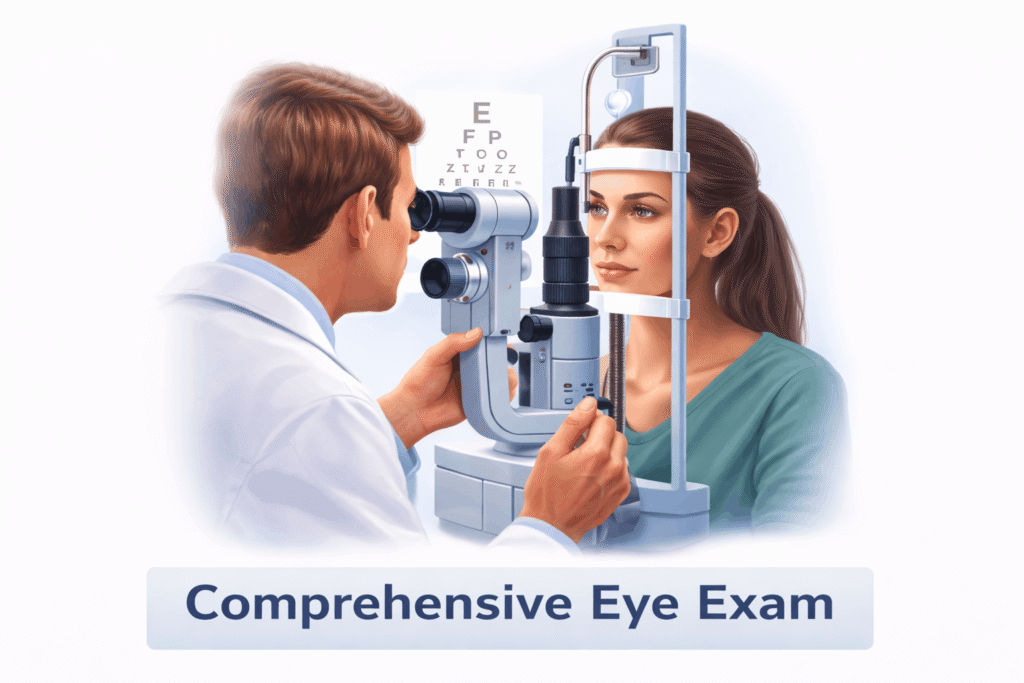
The eye specialist at ARC measures your visual acuity to identify how clear your vision is from different distances. This process may involve carrying out a refraction test to determine if you require spectacles or adjustment of the existing prescription. Additionally, the specialist carries out examination of eye movements, reactions of the pupils and coordination of the eyes.
As part of the comprehensive eye test, the specialist tests eye pressure to help in detecting glaucoma. He also examines the anterior and posterior parts of the eye to look for any existing problem like cataracts, diabetic retinopathy, macular degeneration, retinal disease, optic nerve disease among others. In certain situations, it becomes necessary to carry out further eye scans to have more information about the eyes.
What to Expect During a Comprehensive Eye Test in Gurgaon
At ARC during comprehensive eye check, fir point of contact is our optometrist who starts with taking history about purpose of visit, any systemic illness, any history of eye surgery, the he examine your vision for distance and near, then do the refraction to check your number of glasses, then check intraocular pressure, then eye specialist checks on slit lamp starting from eye lid then cornea, eye movements , then pupillary reaction and anterior segment to rule out any abnormalities, if needed pupil id dilated using tropicamide drop to see any abnormalities of lens, retina, optic nerve, choroid etc
Why You Need a Regular Comprehensive Eye Checkup
Comprehensive eye check-ups are very important for preserving vision as well as diagnosing any eye issues before they become complicated. There are several eye conditions like glaucoma, diabetic retinopathy, and age-related macular degeneration which do not show any symptoms at an early stage. Vision alterations are usually signs that permanent damage is done.
Comprehensive eye examination involves more than just determining the need for glasses. Through this examination, the eye specialist will be able to assess the general health of your eyes, eye pressure, optic nerve and retina as well as detect any symptoms of eye disorders. In some cases, eye examinations have helped in diagnosing other health disorders such as diabetes, hypertension, and high cholesterol levels.
Eye check-ups are crucial for people above the age of 40 years, diabetics, hypertensive, and those who have eye diseases in their families as well as people with visual alterations. Eye examinations are also beneficial for children since they help in improving their vision and academic success.
Key Benefits of a Comprehensive Eye Checkup in Gurgaon
Comprehensive eye checkup help in primary prevention of the disease than treatment, comprehensive eye checkups diagnose the disease, before it started damaging your eyes, even it help in diagnosing the systemic disease, like diabetic retinopathy helps in diagnosing diabetes, hypertension and any brain related disease are also diagnosed with simple optic nerve examination, myopia patients early diagnosing the retinal degeneration, help in prevention of retinal detachment, some genetic disease if detected early can be treated and prevented form further complication, at ARC our specialist comprehensively check each and everything from ealy disease to late disease in a very systemic manner, an treat it accordingly
Essential Components of Our Comprehensive Eye Test
Essential component start from taking history like family history to, personal history to , disease history and treatment
Then start with general examination like vision IOP slit lamp examination and indirect ophthalmoscopy to refraction
If needed various test are performed like OCT FFA, FUNDUS PHOTO, PERIMETRY or if needed blood test
Comprehensive Eye Checkup vs. Basic Vision Screening
Most people believe that vision screening and eye checkup are one and the same thing, yet they are entirely different things serving completely different purposes. Vision screening is a test that aims at diagnosing the presence of any vision problem such as the inability to see far or read small letters. They are usually done in school, workplace, or health-related projects and are used to determine if there is the need for eye checkup.
Comprehensive Eye checkup, on the other hand, is a more elaborate test that not only determines the clarity of vision and need for glasses but also determines the status of other parts of the eye including retina, optic nerve, cornea, lens, etc. Eye pressure is also measured during eye checkup to detect glaucoma. Tests are done depending on the situation and need.
It is very clear that the major difference between vision screening and eye checkup is that while the former diagnoses vision problems, the latter diagnoses other problems. Glaucoma, retinopathy, macular degeneration, and retinal problems can only be diagnosed during an eye checkup.
How Often Should You Schedule a Comprehensive Eye Test?
The frequency of comprehensive eye tests depends on your age, overall health, and risk factors for eye disease. Regular eye examinations are important because many eye conditions develop gradually and may not cause noticeable symptoms in their early stages.
For children, eye examination should be done before starting school, and then every year, those children who use glasses should be examined every 6 monthly, or in any eye disease may be required to visit more frequently
Adults over the age of 40 should undergo regular eye examinations annually or as advised by their eye doctor. This is because the risk of conditions such as glaucoma, cataracts, and age-related macular degeneration increases with age.
People with diabetes, high blood pressure, a family history of eye disease, high refractive errors, or previous eye problems may require more frequent examinations. Specialy in diabetes its very important to visit for eye check ups depending on the stage of diabetic retinopathy, if no diabetic retinopathy once in a year is enough,
Even if your vision appears normal, routine comprehensive eye tests remain essential for maintaining long-term eye health.
FAQ
A comprehensive eye checkup evaluates both visual clarity and internal ocular health. It includes:
- Visual Acuity & Refraction: Testing sharpness of vision to detect myopia, hyperopia, or astigmatism.
- Slit-Lamp Biomicroscopy: Detailed examination of the cornea, lens, iris, and tear film to detect cataracts or dry eye syndrome.
- Tonometry: Non-invasive measurement of intraocular pressure (IOP) to screen for glaucoma.
- Dilated Retinal Exam / Fundus Evaluation: Thorough evaluation of the retina, optic nerve, and retinal blood vessels to screen for diabetic retinopathy, macular degeneration, and vascular conditions.
- Binocular Vision Assessment: Checking eye muscle coordination and depth perception.
A standard vision screening (often done at retail optical shops) only measures how well you read an eye chart and determines your eyeglasses prescription. A comprehensive eye test performed by an ophthalmologist checks the anatomical health of the entire eye, uncovering asymptomatic conditions like early glaucoma, retinal tears, or diabetic eye disease that do not affect central vision in their early stages.
Adults (18–39 years) with normal vision: Every 1 to 2 years.
Adults aged 40 and above: Annually, as risks for presbyopia, cataracts, and glaucoma increase.
Individuals with diabetes, hypertension, or high myopia: Every 6 to 12 months, or as directed by an ophthalmologist.
Children: An initial exam at 6 months, followed by exams at age 3, before entering primary school, and annually thereafter.
Early-stage screening can identify:
- Glaucoma: Damage to the optic nerve caused by elevated intraocular pressure.
- Cataracts: Clouding of the natural crystalline lens.
- Diabetic Retinopathy: Damage or leakage in retinal microvasculature.
- Age-Related Macular Degeneration (AMD): Deterioration of the central retina.
- Dry Eye Disease and Corneal Disorders: Tear-film abnormalities and surface irregularities.
- Retinal Tears and Detachments: Peripheral retinal thinning (lattice degeneration) or breaks.
Yes. The eye is the only place in the body where microvascular blood vessels and nerves can be directly observed without invasive surgery. An eye examination can reveal early clinical signs of systemic diseases such as diabetes, high blood pressure, high cholesterol, autoimmune conditions, thyroid dysfunction, and increased intracranial pressure.
Pupil-dilating drops temporarily widen the pupil, allowing the eye specialist an unobstructed view of the retina, optic disc, macula, and peripheral vitreous cavity. Without dilation, the pupil naturally constricts when light is shone inside, limiting the view of the back of the eye.
Dilation drops typically take 20 to 30 minutes to expand the pupil fully. The resulting light sensitivity and mild blurriness (especially for near vision) generally subside within 3 to 6 hours, depending on individual eye pigment and the specific drops used.
Because pupil dilation causes blurred near vision and increased sensitivity to sunlight, driving immediately afterward is not recommended. It is advisable to bring a pair of UV-blocking sunglasses and arrange for a companion, cab, or public transit for your return journey.
A full evaluation at Arc Eye Centre typically takes between 45 and 90 minutes. This duration includes preliminary automated testing, refraction, 20–30 minutes for pupil dilation, a slit-lamp exam, retinal assessment, and consultation with the doctor.
No. Comprehensive eye tests are non-invasive and painless. You may feel a brief, mild stinging sensation for 5 to 10 seconds when dilating drops are applied, followed by temporary light sensitivity during the examination.
Our Services
Working Hours
Monday:
9am – 7pm
Tuesday:
9am – 7pm
Wednesday:
9am – 7pm
Thursday:
9am – 7pm
Friday:
9am – 7pm
Saturday:
9am – 7pm
Sunday:
11am – 2pm
( Appointment Only )
How can we help you?
ARC Eye and Retina Centre delivers advanced eye and retina care with expert doctors, modern technology, and compassionate patient-focused treatment.