
Uveitis Specialist
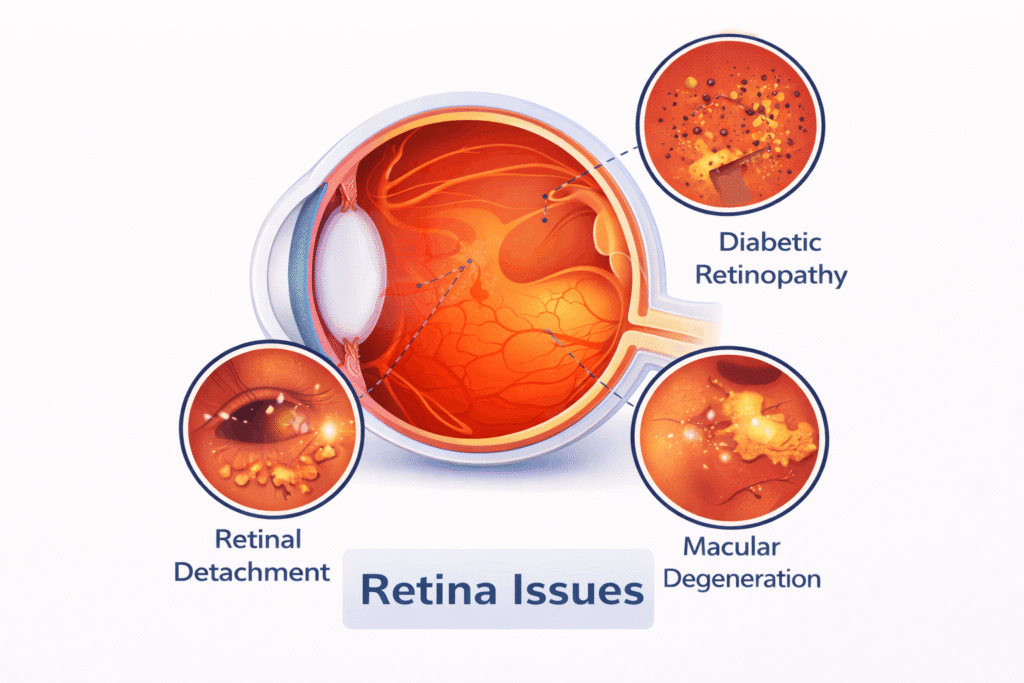
Uveitis refers to inflammation of the uvea, the middle layer of the eye that includes the iris, ciliary body, and choroid. Uveitis can affect the front (anterior), middle (intermediate), or back (posterior) part of the eye. It can be a serious condition if left untreated, potentially leading to vision problems or even blindness.
Causes and Risk Factors:
Uveitis can occur due to a variety of causes, including autoimmune diseases, infections, and injuries. In some cases, the cause remains unknown (idiopathic).
Common Causes:
- Autoimmune conditions: Diseases like rheumatoid arthritis, ankylosing spondylitis, sarcoidosis, lupus, and Behçet's disease can trigger inflammation in the eye.
- Infections: Certain infections, such as tuberculosis, herpes, HIV, or syphilis, can lead to uveitis.
- Eye injury or trauma: An injury to the eye can cause inflammation, leading to uveitis.
- Systemic inflammatory conditions: Conditions such as Crohn’s disease or ulcerative colitis.
- HLA-B27 gene: Some people with the HLA-B27 gene are more prone to developing uveitis, especially acute anterior uveitis.
Risk Factors:
- Age: Uveitis can occur at any age, but certain types may be more common in certain age groups.
- Sex: Some types of uveitis are more common in men, such as anterior uveitis.
- Family history: A family history of uveitis or autoimmune diseases may increase the risk.
- Infection exposure: Exposure to certain infections (such as herpes or toxoplasmosis) can increase the risk of uveitis.
Symptoms:
The symptoms of uveitis depend on which part of the eye is affected, but they typically include:
1. Pain: Often a deep, aching pain around or behind the eye.
2. Redness: The white part of the eye may appear red or bloodshot, especially in anterior uveitis.
3. Blurred vision: Vision may become cloudy or hazy, and you might experience difficulty seeing clearly.
4. Sensitivity to light (photophobia): Bright lights may be uncomfortable or cause pain.
5. Floaters: Dark spots or squiggly lines may appear in your field of vision, especially if the inflammation affects the back of the eye (posterior uveitis).
6. Tearing: Excessive tearing or watering of the eye.
7. Headaches: Some people may experience headaches due to the inflammation.
In many cases, symptoms may improve on their own, but in some, they may persist or recur, requiring medical attention.
Diagnosis:
A diagnosis of uveitis is made based on a thorough eye exam and medical history.
Key Diagnostic Tests:
- Dilated eye exam: The doctor will use eye drops to dilate your pupils and look at the retina, optic nerve, and other parts of the eye for signs of inflammation.
- Slit-lamp examination: This is a special microscope that allows the doctor to examine the front structures of the eye (such as the iris and cornea) for signs of inflammation.
- Blood tests: To identify underlying causes, such as autoimmune diseases or infections.
- Infectious tests: Your doctor may test for specific infections, such as syphilis, tuberculosis, or herpes.
- Imaging tests: In some cases, imaging tests like OCT (Optical Coherence Tomography) or fluorescein angiography may be used to check the back of the eye and the retina.
Management & Treatment:
The goal of treatment is to reduce inflammation, relieve symptoms, and prevent complications like vision loss.
Medications:
1. Corticosteroids (steroids): These are the primary treatment to reduce inflammation. They can be administered:
- Topical (eye drops) for mild cases, especially if the front of the eye is involved.
- Oral steroids (pills) for more severe or widespread inflammation.
- Steroid injections into the eye or around the eye for more focused treatment.
2. Immunosuppressive drugs: For cases where the inflammation is caused by an autoimmune disease or in chronic uveitis, drugs that suppress the immune system (like methotrexate, azathioprine, or cyclophosphamide) may be used to prevent the immune system from attacking the eye.
3. Anti-inflammatory medications: Nonsteroidal anti-inflammatory drugs (NSAIDs) might also be prescribed for pain relief and reducing inflammation.
4. Antibiotics or antivirals: If the uveitis is caused by an infection, such as herpes or tuberculosis, the doctor will prescribe appropriate antibiotics or antiviral medications.
Surgery:
Surgery is rarely needed for uveitis but may be required in cases of complications like cataracts, glaucoma, or retinal damage caused by prolonged inflammation.
Follow-up Care:
Uveitis often requires long-term monitoring to manage inflammation, prevent complications, and adjust treatments as necessary. You may need to see your ophthalmologist regularly to check for changes in your eye health.
Complications of Uveitis:
If untreated or poorly controlled, uveitis can lead to serious complications, such as:
- Cataracts: Clouding of the lens in the eye, which can develop if uveitis is not controlled.
- Glaucoma: Increased pressure inside the eye, which can lead to optic nerve damage and permanent vision loss.
- Retinal damage: Prolonged inflammation can damage the retina, leading to vision loss.
- Macular edema: Swelling of the central part of the retina (the macula), causing blurred or distorted central vision.
Our Services
Working Hours
Monday:
9am – 7pm
Tuesday:
9am – 7pm
Wednesday:
9am – 7pm
Thursday:
9am – 7pm
Friday:
9am – 7pm
Saturday:
9am – 7pm
Sunday:
11am – 2pm
( Appointment Only )
How can we help you?
ARC Eye and Retina Centre delivers advanced eye and retina care with expert doctors, modern technology, and compassionate patient-focused treatment.