
Posterior Vitreous Detachment (PVD) & Floaters
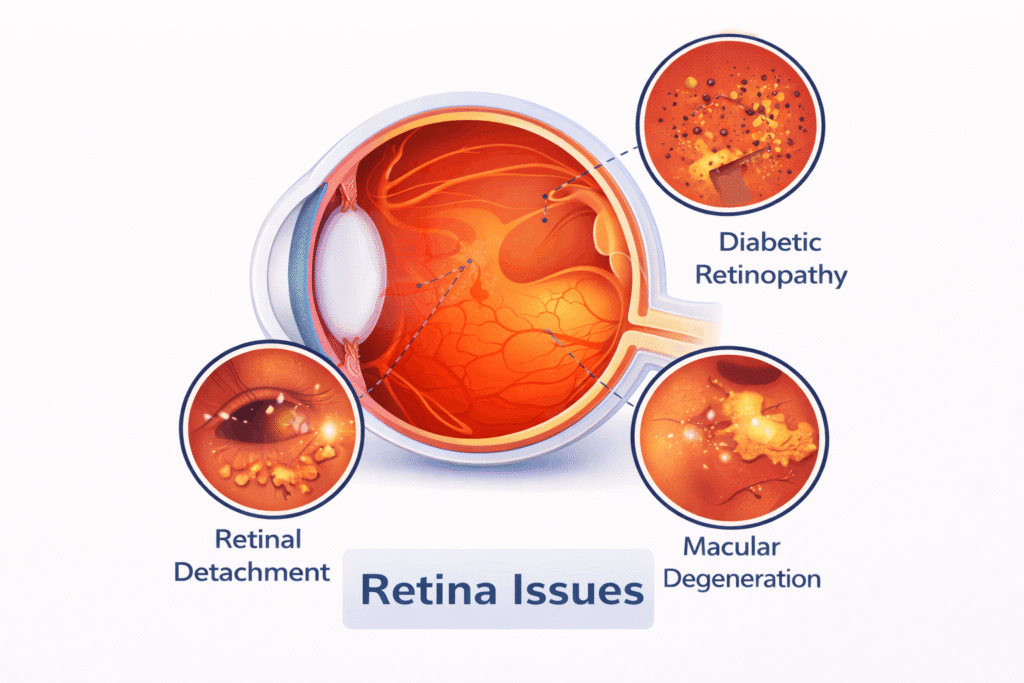
Posterior Vitreous Detachment (PVD) is a condition where the gel-like substance (called the vitreous) inside the eye shrinks and pulls away from the back of the eye, or the retina. This is a common condition, especially as we age. PVD can cause floaters, which are small, moving spots or lines that appear in your field of vision.
Causes and Risk Factors:
- Aging: PVD is more common in people over the age of 50 as the vitreous gel naturally shrinks over time.
- High myopia (nearsightedness): People with severe nearsightedness are at higher risk of developing PVD.
- Eye trauma or injury: A blow to the eye can trigger PVD.
- Previous eye surgery: For example, after cataract surgery, the risk of developing PVD can increase.
- Other eye conditions: Conditions like diabetic retinopathy or inflammation inside the eye can also increase the risk.
Symptoms:
The primary symptom of PVD is the appearance of floaters, which are often described as:
1. Small dots, lines, or cobwebs that move across your field of vision
2. They may be more noticeable when looking at bright backgrounds, like a white wall or blue sky
3. Occasionally, you might also experience flashes of light (known as photopsia), especially in the peripheral vision
In some cases, if the vitreous detaches abruptly, it may cause a sudden increase in floaters or flashes of light.
Diagnosis:
- Comprehensive eye exam: Your eye doctor will dilate your pupils and examine the back of the eye (retina) to check for signs of PVD and other potential complications.
- Ophthalmoscopy or Slit Lamp Exam: These allow your doctor to check the vitreous and retina for any abnormal changes or tears.
- Optical Coherence Tomography (OCT): This may be used to capture detailed images of the retina, especially if there's a concern about a tear or retinal detachment.
Management & Treatment:
In Most Cases:
1. No treatment is needed for PVD itself, as it's a natural part of aging and usually doesn’t pose a serious threat to vision.
2. Floaters often become less noticeable over time as the brain adapts to them and they settle out of the line of sight.
If Complications Arise (such as Retinal Tear or Detachment):
1. If the PVD causes a retinal tear, treatment options include:
- Laser treatment (photocoagulation) to seal the tear and prevent retinal detachment.
- Cryotherapy (freezing treatment) to repair the tear.
2. If a retinal detachment occurs (a rare but serious complication), surgery will be needed to repair it and preserve vision.
Managing Floaters:
While floaters can be annoying, they rarely affect vision permanently. However, if floaters significantly impact your vision, surgery may be considered:
1. Vitrectomy: A surgical procedure that removes the vitreous gel along with the floaters.
2. Laser treatment: Some doctors use lasers to break up the floaters, though this is less common.
When to Seek Immediate Medical Attention:
- Sudden onset of floaters or a significant increase in their number
- Flashes of light or photopsia, especially if new or persistent
- A shadow or curtain in your peripheral vision, which may indicate a retinal tear or detachment
- Sudden vision loss or a decline in vision in one eye
Prevention Tips:
- Regular eye exams, especially if you're over 50 or at higher risk due to conditions like high myopia or a history of eye surgery
- Protect your eyes from injury by wearing safety glasses in high-risk situations
- If you have diabetes or high blood pressure, manage these conditions with the help of your doctor, as they can increase the risk of complications.
Our Services
Working Hours
Monday:
9am – 7pm
Tuesday:
9am – 7pm
Wednesday:
9am – 7pm
Thursday:
9am – 7pm
Friday:
9am – 7pm
Saturday:
9am – 7pm
Sunday:
11am – 2pm
( Appointment Only )
How can we help you?
ARC Eye and Retina Centre delivers advanced eye and retina care with expert doctors, modern technology, and compassionate patient-focused treatment.